A good USB-C charger should solve a real daily problem: one compact adapter for a phone, tablet, earbuds, and sometimes a light laptop. This shortlist focuses on wattage, port mix, power sharing, brand trust, and India-specific safety context instead of chasing the cheapest high-watt claim.
Buyer verdict: which charger should you choose?
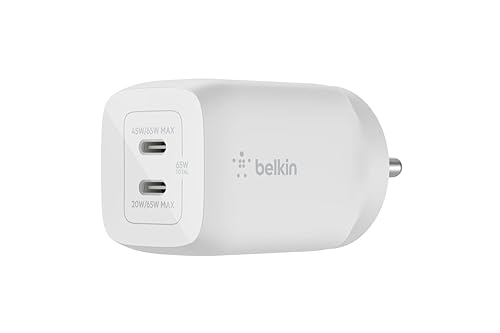
Choose the Belkin 65W dual USB-C GaN charger if you want the safest premium pick for phone, tablet, and light laptop use, with a clear two-port power split and stronger brand confidence.
Choose the Ambrane 70W 3-port GaN charger if you want the best practical multi-device value: two USB-C ports, one USB-A port, and enough headroom for a phone-plus-laptop setup.
Choose the boAt 67W GaN charger if you want a familiar Indian consumer brand and a travel-friendly triple-port charger for phones, tablets, and compatible USB-C laptops.
Quick picks
| Product | Best for | Why it stands out | CTA |
|---|---|---|---|
| Belkin 65W dual USB-C GaN charger | Premium phone, tablet, and light laptop charging | Two USB-C ports, a visible 45W + 20W split, compact GaN design, and a stronger warranty-led trust angle. | Check price on Amazon |
| Ambrane 70W 3-port GaN charger | Best multi-device value | Two Type-C ports plus one USB-A port, 70W class output, BIS certification visible on the listing, and a practical laptop-plus-phone angle. | Check price on Amazon |
| boAt 67W GaN laptop charger | Familiar-brand travel charger | 67W class output, dual USB-C plus USB-A layout, PD/PPS/QC support claims, and broad phone/tablet/laptop positioning. | Check price on Amazon |
Best premium pick: Belkin 65W dual USB-C GaN charger
Verdict: Belkin is the pick for buyers who want a clean, lower-drama charger for a phone, tablet, and light laptop rather than the cheapest adapter with the biggest number.
Pros
- Clear two-port logic: The visible 45W + 20W split makes it easier to understand what happens when charging two devices at once.
- Better trust story: Belkin is the stronger brand-confidence pick here, especially when a charger may touch expensive phones, tablets, or laptops.
- GaN size advantage: GaN helps keep the charger compact for bag carry compared with older bulky adapters.
Cons
- Only two ports: It is not the best choice if you also want to keep a USB-A cable in the same adapter.
- Not a heavy laptop charger: A 65W class charger is better for thin-and-light laptops than workstation-class machines.
- Premium angle costs more: If brand confidence is not your priority, Ambrane may feel more practical.
Good fit: You use a phone, tablet, earbuds, and a compatible light USB-C laptop and want one dependable travel adapter.
Skip if: You need three ports, USB-A support, or enough power for a high-draw laptop under load.
Best multi-device value: Ambrane 70W 3-port GaN charger
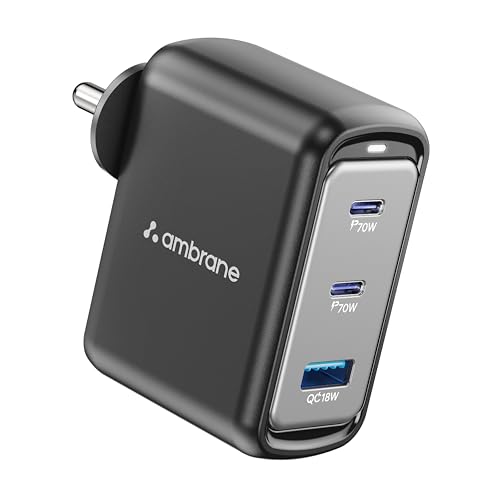
Verdict: Ambrane is the most practical value pick if your real goal is charging a laptop, phone, and older accessory without carrying multiple wall adapters.
Pros
- Useful port mix: Two USB-C ports plus one USB-A port covers newer and older cables better than a USB-C-only charger.
- 70W class headroom: The wattage gives sensible room for tablets and many thin-and-light laptops when used correctly.
- India safety cue: BIS certification is visible on the listing, which matters more than chasing unknown ultra-cheap high-watt adapters.
Cons
- Power sharing matters: Plugging in three devices at once can reduce what each device receives.
- Brand trust is different from Belkin: It is a value-first choice, not the premium-confidence pick.
- Cable quality still decides speed: A weak cable can make a good charger behave like a slow charger.
Good fit: You want one charger for a USB-C laptop, phone, and one older USB-A accessory.
Skip if: You prefer a simpler two-port premium charger or need a dedicated high-power laptop brick.
Best familiar-brand travel pick: boAt 67W GaN laptop charger
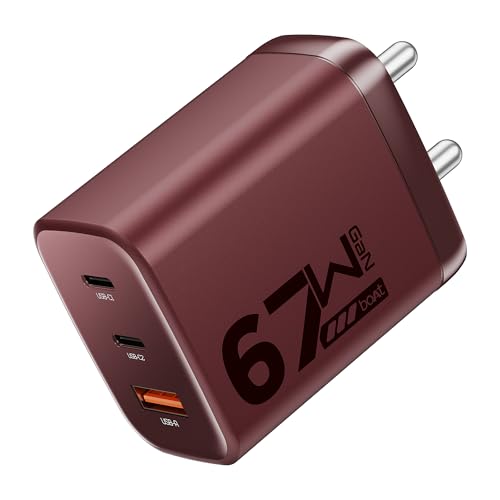
Verdict: The boAt charger is the familiar-brand option for buyers who want a compact triple-port adapter and are mainly charging phones, tablets, and compatible USB-C laptops.
Pros
- Broad protocol story: The listing highlights PD, PPS, and QC support, which is useful when phones and laptops negotiate power differently.
- Triple-port convenience: Dual USB-C plus USB-A makes it easier to travel with mixed cables.
- Recognizable local brand: boAt can feel easier to trust than unknown marketplace brands in this price-sensitive category.
Cons
- Shared output is not magic: Three connected devices will not each receive the full headline wattage.
- Laptop fit needs checking: Some laptops need more than a 65W-class charger, especially while under load.
- Color/design may be subjective: The listing variant we checked is a visible color-forward charger, which may not suit every setup.
Good fit: You want a compact travel charger from a familiar Indian electronics brand.
Skip if: You want the cleanest premium option or a charger for a high-power laptop workload.
How many watts do you actually need?
- 25W to 35W: Usually enough for many phones and smaller accessories.
- 45W: A better tablet and small-laptop starting point, but not always enough for heavier laptops.
- 65W to 70W: The practical sweet spot for one travel charger that can handle phones, tablets, and many thin-and-light laptops.
- 100W: Useful for larger laptops and faster power-bank recharging, but it needs the right cable and device support.
Related reading
Charger Watts Explained | Best Power Banks in 2026 | Free Tools | Reviews
Bottom line
Most buyers should start with a 65W to 70W GaN charger, not a random ultra-cheap high-watt adapter. Belkin is the premium confidence pick, Ambrane is the practical value pick, and boAt is the familiar-brand travel pick.
Product names, seller availability, included cables, warranty terms, and compatibility claims can change. Recheck the retailer page, your device charging requirement, and your cable rating before buying.